## Cold Weather, Warm CPUs
**A Retro Code Ramen Life & Project Update**
Winter has a funny way of forcing focus. When it’s cold enough outside that even the dogs hesitate at the door, the only reasonable response is to stay inside and build things. That’s pretty much been the theme lately: a lot of progress across multiple projects, a lot of late nights, and just enough pinball to keep me from turning into pure documentation.
This post is a bit of a state-of-the-union for Retro Code Ramen: Nitro-Core-DX, RAMN Online, RamenDesk 95, and the quiet beginnings of something that looks suspiciously like a retro web ecosystem.
---
## Nitro-Core-DX: From Emulator to “This Could Be Hardware”

The biggest win lately has been Nitro-Core-DX crossing a mental threshold for me. It’s no longer just “an emulator I’m tinkering with.” It’s now documented, specified, and tested enough that real hardware is a serious next step.
Over the last couple of weeks, I completed a full hardware specification intended for FPGA implementation. Not a sketch. Not notes. A real, end-to-end document covering:
* CPU architecture and instruction set
* Memory maps and banked addressing
* PPU and APU behavior
* Input systems designed around latch-based serial controllers
* Timing, synchronization, and ROM formats
* Practical FPGA implementation guidance
This document is now the single source of truth for Nitro-Core-DX. If someone wanted to implement this console in hardware, they could. That’s a weirdly satisfying sentence to write.
Alongside that, the input system was completely refactored to behave like real hardware instead of a convenient abstraction. Inputs are now latched on edge transitions, read serially, and persist until the next latch. It’s less forgiving, more annoying, and exactly how it should be if this thing is ever going to live outside an emulator window.
I also spent a lot of time fixing correctness issues in the CPU core itself. Signed branches now behave correctly with overflow. CMP immediate instructions no longer collide with branch decoding. RET properly handles both normal calls and interrupt returns. Stack operations are validated instead of assumed. None of this is flashy, but all of it matters if you don’t want your future hardware to behave like it’s haunted.
On top of that, CoreLX, the high-level language targeting Nitro-Core-DX, got some long-standing compiler bugs fixed. Tile addressing issues, broken binary expressions, and register handling mistakes are now cleaned up and documented. There’s still a known blank-screen issue with CoreLX-compiled ROMs that I’m actively digging into, but the compiler itself is now far more trustworthy than it was even a month ago.
The short version: Nitro-Core-DX is sturdier, better documented, and closer to being “real” than it’s ever been.
---
## Documentation as a First-Class Feature
One theme across *everything* lately has been documentation cleanup. Not glamorous, but absolutely necessary.
For Nitro-Core-DX, that meant reorganizing the entire docs tree into something navigable: specifications, testing, issues, planning, guides, and archives all have a home now. The README is shorter and clearer. Narrative content lives where it belongs instead of clogging technical references.
The same philosophy carried over into RAMN Online and related projects. Installation guides, deployment notes, security documentation, and architecture overviews are now structured so Future Me (or anyone else) can actually understand what Past Me was thinking.
This has also been a defensive move. These projects are getting big enough that “I’ll remember how this works” is no longer a strategy.
---
## RAMN Online, Checkpoint, and the Shape of a Retro Web
While Nitro-Core-DX leans deep into hardware and emulation, RAMN Online is where the retro internet obsession really comes out.
This week saw a major push on **Checkpoint**, which is shaping up to be a GameFAQs-meets-early-Yahoo-Games-portal kind of site. It now has:
* A real game database
* Community-style guides, FAQs, and reviews
* Ratings, voting, and filtering
* Platform-specific browsing
* Seeded data for classic NES, Game Boy, Genesis, and 90s PC games
It’s intentionally earnest. No irony poisoning. Just structured information, community contributions, and a design that feels like it belongs in a CRT glow.
Under the hood, RAMN Online also gained a proper staging system so external or experimental sites can be built without destabilizing production. This is laying the groundwork for a network of small, focused sites that all live under the same retro umbrella.
Which brings me to **Halo**.
---
## Halo as the New Yahoo (At Least Here)
Halo is quickly becoming the front door.
For RamenDesk 95 and RAMN Online, Halo is the Yahoo-style starting point: search, directories, discovery, and gentle guidance through a weird little web. It’s not trying to be Google. It’s trying to be friendly. Something you browse, not something that shouts answers at you.
This is the beginning of what I’ve been thinking of as my retro web ecosystem. Not a parody. Not a skin. A place where things are slower, smaller, and a little more intentional.
RamenDesk 95 ties into this directly. I’ve done some cleanup, feature tweaks, and integration prep so that RAMN sites can live comfortably inside its browser. The goal is for it to feel less like “a website pretending to be an OS” and more like “an OS that happens to be web-based.”
---
## Ko-fi, Sustainability, and Letting People Support the Weird Stuff
I quietly added Ko-fi support across the ecosystem, including the login screen and welcome window. Not with pressure. Just visibility.
These projects take time, and time competes with everything else in life. If someone enjoys what I’m building and wants to toss a few dollars at it, I want that to be easy. If not, everything still works. That balance matters to me.
---
## Pinball, Avoiding the Cold, and Staying Sane
On the non-coding side, I’ve been playing a lot of pinball lately. Specifically the TMNT table on the AtGames Legends Pinball Micro. I cracked a 58 million score recently, which felt like a small personal victory in between debugging CPU flags and CSS layering issues.
Honestly, a lot of this work has been about avoiding the cold. But there are worse ways to spend winter than building imaginary hardware, a fake internet, and chasing multiballs.
---
## Looking Ahead
Next up:
* Solving the CoreLX blank screen issue
* Beginning real FPGA experimentation for Nitro-Core-DX
* Expanding Checkpoint with deeper community features
* Continuing to flesh out Halo as the connective tissue
* Adding more RAMN sites as the ecosystem grows
Retro Code Ramen is starting to feel less like a collection of projects and more like a place. That’s new. And kind of exciting.
As always, thanks for reading, poking around, and indulging my obsession with old ideas rebuilt carefully.
— AJ
Retro Code Ramen
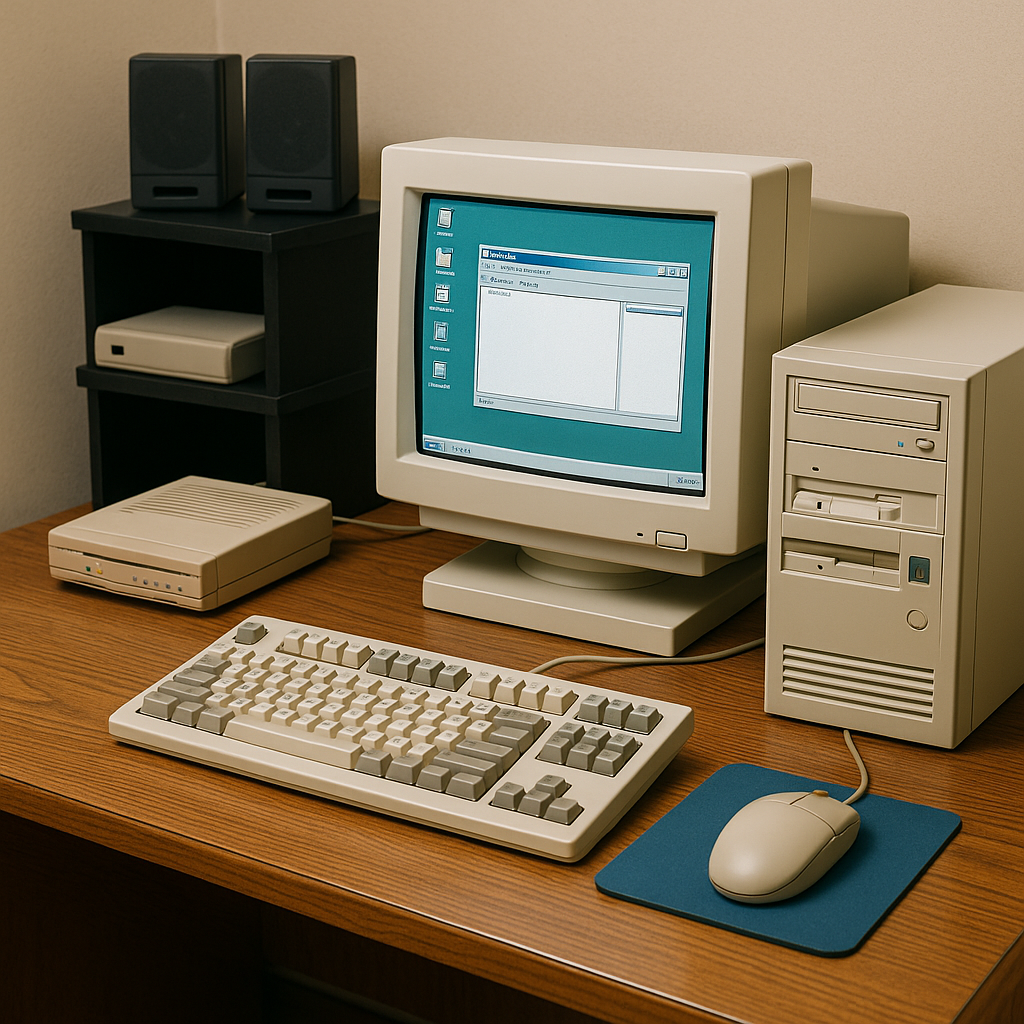 RamenDesk95 has picked up a few new tricks since last week — the kind of small updates that make the whole universe feel a little more “lived in.”
The biggest one: Winamp is now in beta.
RamenDesk95 has picked up a few new tricks since last week — the kind of small updates that make the whole universe feel a little more “lived in.”
The biggest one: Winamp is now in beta.
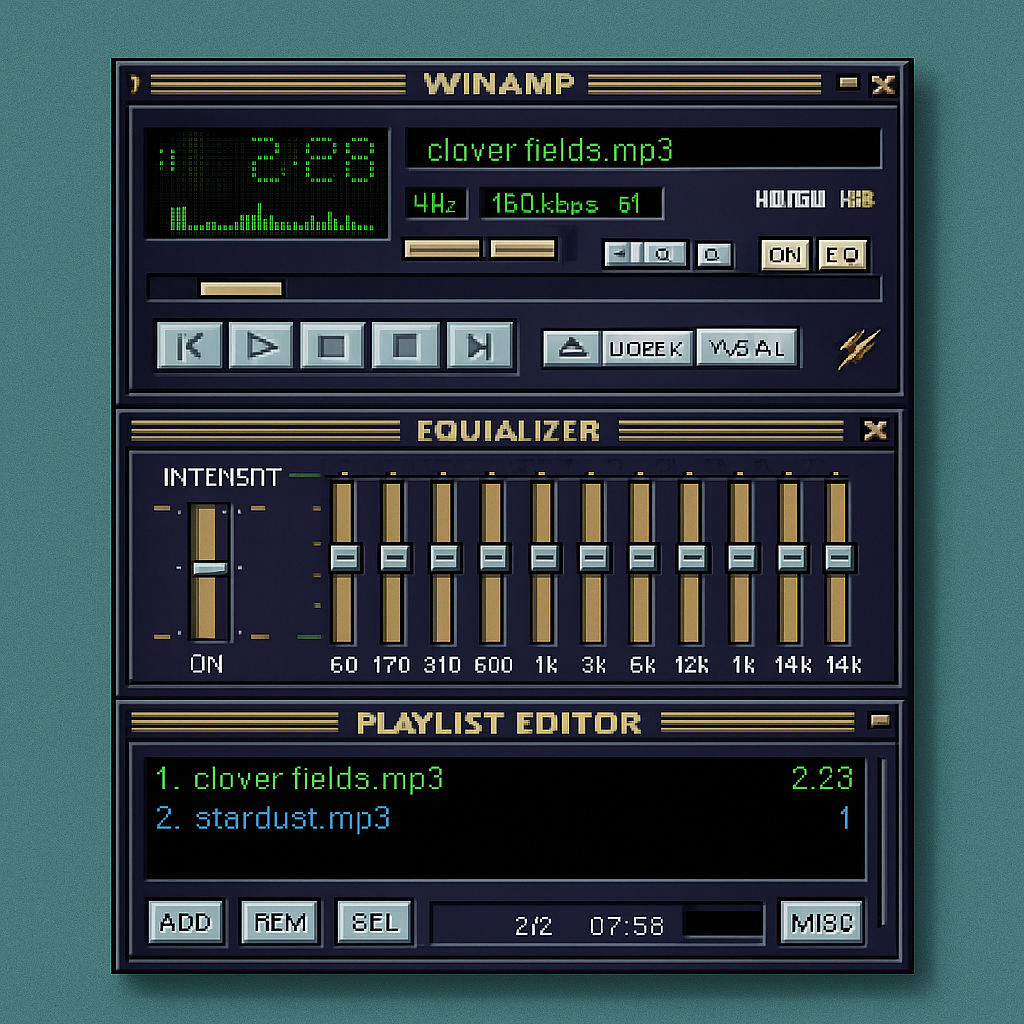 Right now it only plays audio files you manually upload — the full RamenDesk file system integration is still in the works — but it does play music. And it plays it with that familiar stubborn charm Winamp always had. It’s like watching someone attempt a dance routine they haven’t practiced since 1999: mostly right, a little off, but somehow perfect because of it.
I also cleaned up some UI quirks, buffed performance a bit, and introduced a very simple task manager. It’s not flashy, but it adds just enough texture that the desktop feels more like a real environment and less like a clever simulation.
What surprises me is how directly this project taps into the nostalgia nerve — that quiet, warm sensation you get when something reminds you not just of “the old days,” but of who you were in the old days. In my case: a kid staring into an open beige case with my big brother, trying to figure out which orientation the CPU actually went in.
And speaking of diving back into the dial-up days…
I’ve also introduced Ramen Online, a standalone service meant to resurrect the spirit of America Online at its chaotic, charming peak. It’s very early — extremely early — but already includes:
Internal email
Buddy lists
Instant messaging
And a full simulated dial-up sequence when you sign in
Right now it only plays audio files you manually upload — the full RamenDesk file system integration is still in the works — but it does play music. And it plays it with that familiar stubborn charm Winamp always had. It’s like watching someone attempt a dance routine they haven’t practiced since 1999: mostly right, a little off, but somehow perfect because of it.
I also cleaned up some UI quirks, buffed performance a bit, and introduced a very simple task manager. It’s not flashy, but it adds just enough texture that the desktop feels more like a real environment and less like a clever simulation.
What surprises me is how directly this project taps into the nostalgia nerve — that quiet, warm sensation you get when something reminds you not just of “the old days,” but of who you were in the old days. In my case: a kid staring into an open beige case with my big brother, trying to figure out which orientation the CPU actually went in.
And speaking of diving back into the dial-up days…
I’ve also introduced Ramen Online, a standalone service meant to resurrect the spirit of America Online at its chaotic, charming peak. It’s very early — extremely early — but already includes:
Internal email
Buddy lists
Instant messaging
And a full simulated dial-up sequence when you sign in
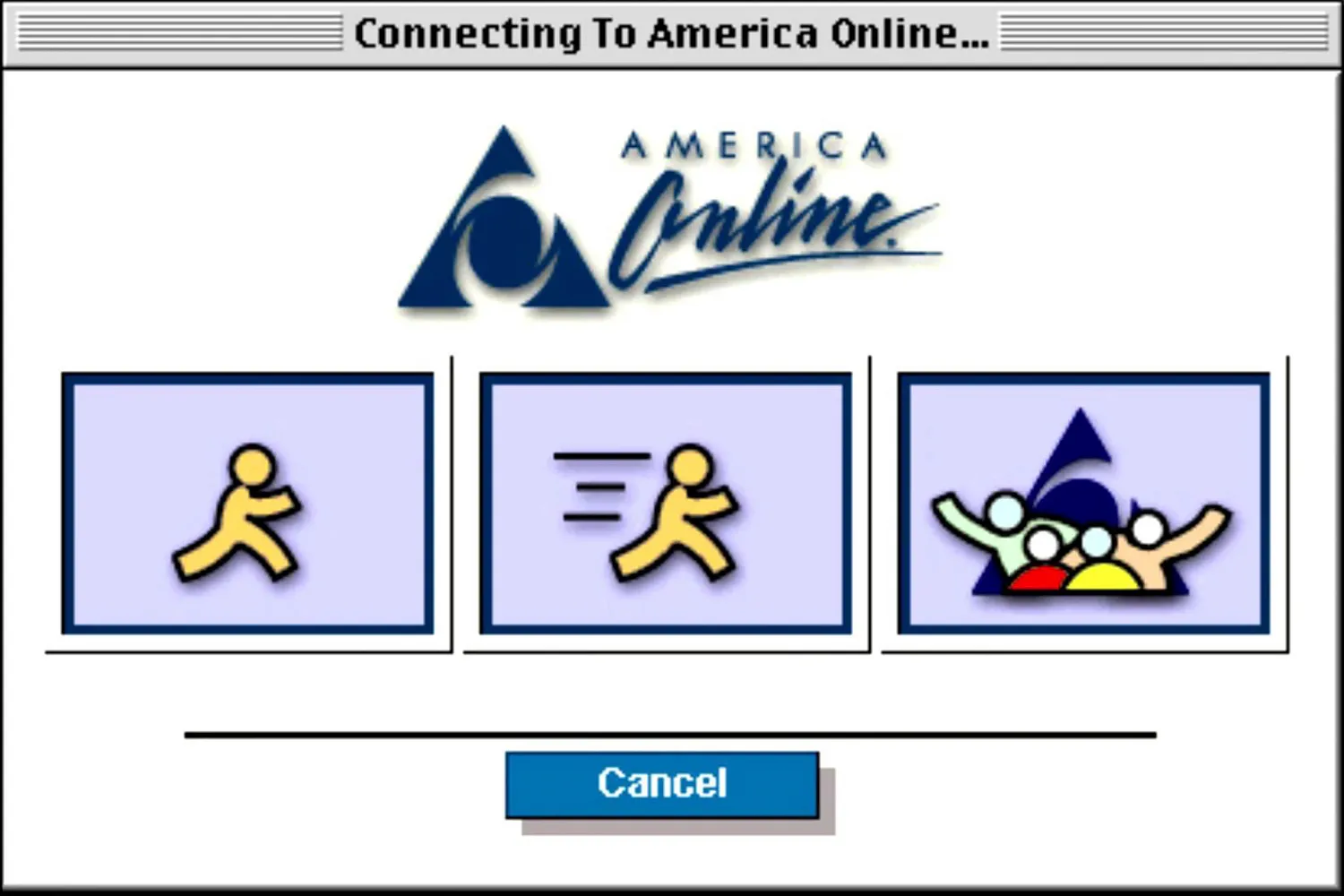 That last bit gets me every time. Watching the faux-handshake and connection flow instantly pulls me back to waiting for the modem to finish shrieking before I could check messages or download a 300kb JPEG that promised to be worth the wait.
There’s still a long road ahead. Once IM and mail get properly sorted, the next milestone is the Channels system — a modern reconstruction of AOL’s old content hubs. I’m even toying with the idea of having AI editors generate fresh daily content, because if you’re going to resurrect the past, you might as well bring some future weirdness with it.
And if you want to try Ramen Online yourself, you don’t need to boot RamenDesk95 — you can go straight to ramn.online. It’s early, it’s rough, and it’s absurdly nostalgic… which might be the most honest description of this whole project.
More updates soon — probably right after I upgrade something, break something else, fix it, and then spend a moment just admiring the Start button like it’s an old friend from childhood.
That last bit gets me every time. Watching the faux-handshake and connection flow instantly pulls me back to waiting for the modem to finish shrieking before I could check messages or download a 300kb JPEG that promised to be worth the wait.
There’s still a long road ahead. Once IM and mail get properly sorted, the next milestone is the Channels system — a modern reconstruction of AOL’s old content hubs. I’m even toying with the idea of having AI editors generate fresh daily content, because if you’re going to resurrect the past, you might as well bring some future weirdness with it.
And if you want to try Ramen Online yourself, you don’t need to boot RamenDesk95 — you can go straight to ramn.online. It’s early, it’s rough, and it’s absurdly nostalgic… which might be the most honest description of this whole project.
More updates soon — probably right after I upgrade something, break something else, fix it, and then spend a moment just admiring the Start button like it’s an old friend from childhood.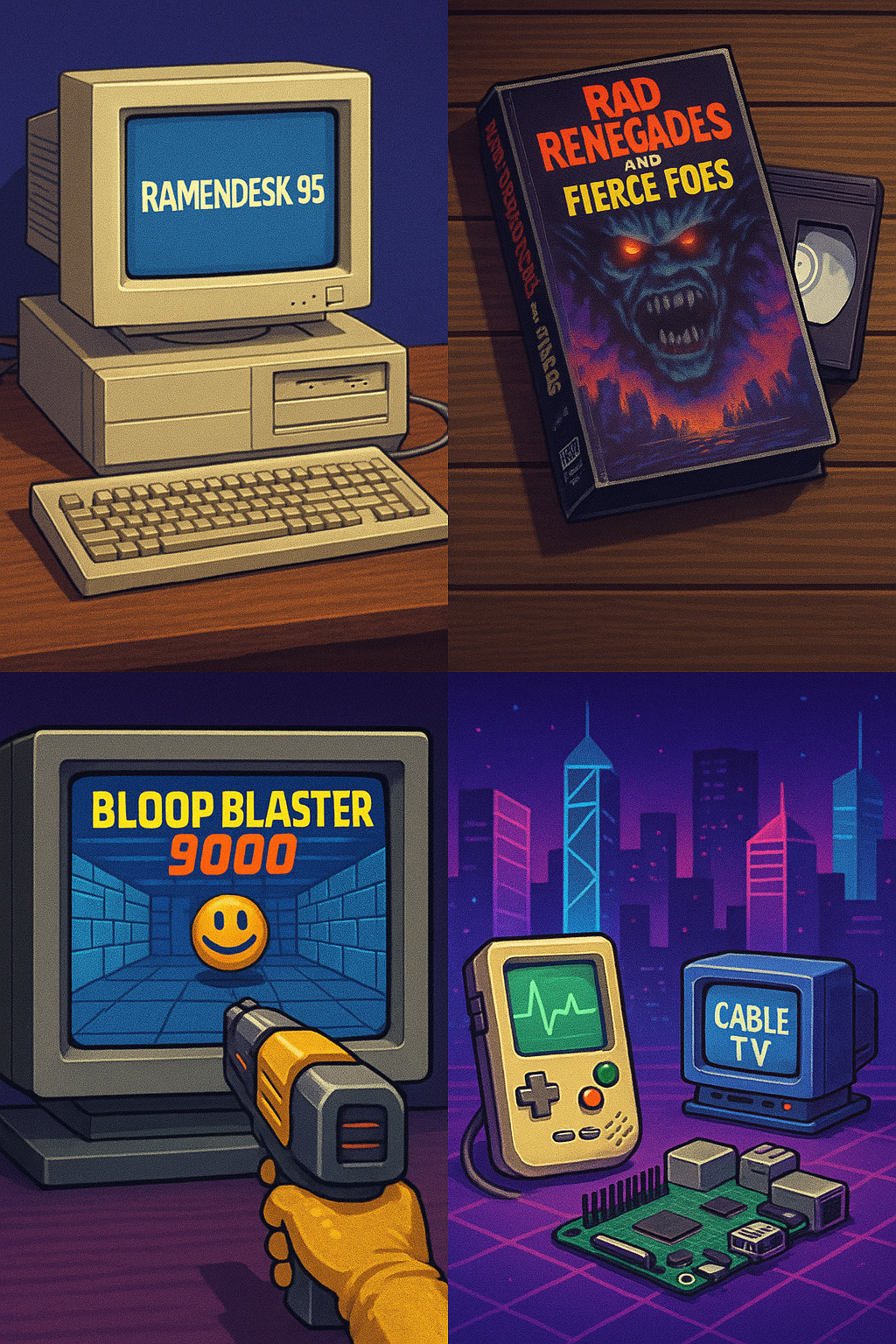 If you're reading this, then welcome to RamenDesk 95, the strange little corner of the internet where every nostalgic obsession I’ve ever had finally gets to live in one place. This whole site started as a passion project built around my love for retro computers, operating systems, and the weird charm of Web 1.0. I’ve always wanted a single hub that feels like booting up a Windows 95 machine, clicking around random folders, and finding something fun, odd, or experimental hidden in every directory.
 RamenDesk 95 is the centerpiece of everything I love: old-school UI, late-night hacking vibes, neon-soaked nostalgia, tabletop games, tiny games in weird formats, and a general refusal to let the spirit of 1998 disappear quietly.
This site is going to grow over time. I’ll be adding features piece by piece—forums, a chat system, maybe even its own “Mail” client that feels like a throwback to dial-up days. There may even be a Geocities-style area at some point, full of blinking GIFs, tiled backgrounds, and the kind of chaos that defined early web culture. I want this place to become a little community and a functional retro playground.
Rad Renegades and Fierce Foes
One of the biggest inspirations for building this site was my ongoing tabletop RPG project, Rad Renegades and Fierce Foes. It’s a mash-up of everything I loved from 80s and 90s movies—horror marathons, sci-fi VHS rentals, campy action flicks, neon crime thrillers. The game uses a d20-inspired system but with its own rules and attitude. It’s weird, loud, nostalgic, and meant to feel like popping an old tape into a VCR.
The Player’s Handbook is already here on the site, and it’s only going to keep expanding.
Bloop Blaster 9000
RamenDesk 95 is the centerpiece of everything I love: old-school UI, late-night hacking vibes, neon-soaked nostalgia, tabletop games, tiny games in weird formats, and a general refusal to let the spirit of 1998 disappear quietly.
This site is going to grow over time. I’ll be adding features piece by piece—forums, a chat system, maybe even its own “Mail” client that feels like a throwback to dial-up days. There may even be a Geocities-style area at some point, full of blinking GIFs, tiled backgrounds, and the kind of chaos that defined early web culture. I want this place to become a little community and a functional retro playground.
Rad Renegades and Fierce Foes
One of the biggest inspirations for building this site was my ongoing tabletop RPG project, Rad Renegades and Fierce Foes. It’s a mash-up of everything I loved from 80s and 90s movies—horror marathons, sci-fi VHS rentals, campy action flicks, neon crime thrillers. The game uses a d20-inspired system but with its own rules and attitude. It’s weird, loud, nostalgic, and meant to feel like popping an old tape into a VCR.
The Player’s Handbook is already here on the site, and it’s only going to keep expanding.
Bloop Blaster 9000
 This site also gives me a place to share small games and experiments, starting with Bloop Blaster 9000. It’s my first AI-generated game, inspired by the old Faceball series. It’s simple, strange, and very much the kind of project that would’ve appeared on a CD-ROM demo disc in 1997. And honestly, that’s exactly the vibe I was aiming for.
Looking Ahead
<image-retro-future-tech>
RetroCodeRamen isn’t just a website—it’s the staging ground for a whole lineup of future projects I’ve been excited to build:
A modern-day Cybiko-style communicator, using LoRaWAN and custom firmware
A tiny personal cable TV station built using Raspberry Pis and software-defined radios
More BASIC-powered mini-games using the site’s own interpreter
New sections, new apps, and whatever other retro-inspired experiments come to mind
If you want to follow the chaos, see what I’m working on, or dig into the code behind the scenes, everything lives here:
https://github.com/RetroCodeRamen/
More to come, and thanks for reading. The best part is that this is only the start.
This site also gives me a place to share small games and experiments, starting with Bloop Blaster 9000. It’s my first AI-generated game, inspired by the old Faceball series. It’s simple, strange, and very much the kind of project that would’ve appeared on a CD-ROM demo disc in 1997. And honestly, that’s exactly the vibe I was aiming for.
Looking Ahead
<image-retro-future-tech>
RetroCodeRamen isn’t just a website—it’s the staging ground for a whole lineup of future projects I’ve been excited to build:
A modern-day Cybiko-style communicator, using LoRaWAN and custom firmware
A tiny personal cable TV station built using Raspberry Pis and software-defined radios
More BASIC-powered mini-games using the site’s own interpreter
New sections, new apps, and whatever other retro-inspired experiments come to mind
If you want to follow the chaos, see what I’m working on, or dig into the code behind the scenes, everything lives here:
https://github.com/RetroCodeRamen/
More to come, and thanks for reading. The best part is that this is only the start.